Maintaining the optimal health of your horse is crucial for its overall well-being and performance. One of the key factors in ensuring your horse stays healthy is monitoring its body condition. The body condition of a horse refers to its level of fatness or thinness, which can significantly impact its health, fertility, and athletic ability. A widely used tool for assessing the body condition of horses is the Body Condition Score (BCS) chart.
The BCS chart is a systematic method of evaluating the amount of fat on a horse’s body. It helps horse owners and caregivers to identify whether their horse is underweight, overweight, or at an ideal weight. This information is vital for making informed decisions about the horse’s diet, exercise, and healthcare. By regularly assessing a horse’s body condition, owners can detect potential health issues early on and take corrective measures to prevent more severe problems from developing.
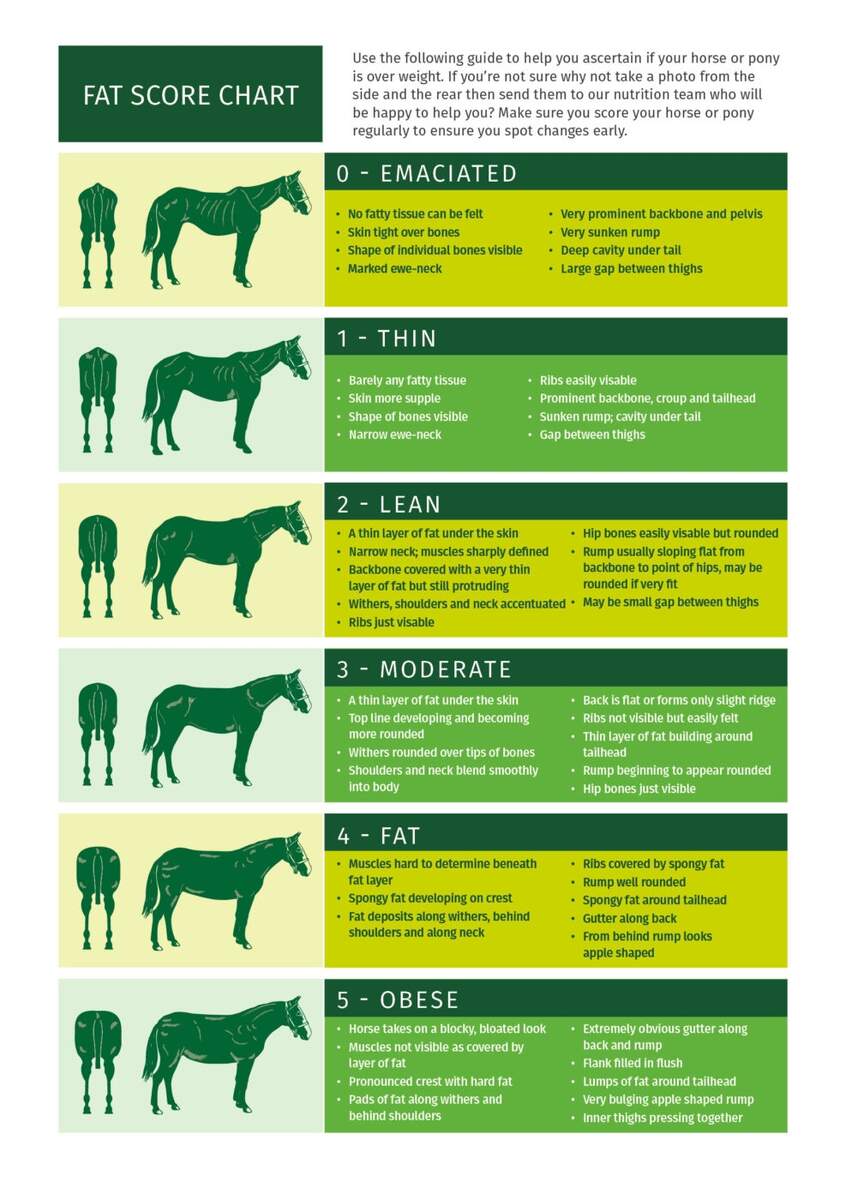
Weight Management Dengie Horse Feeds
What is a Body Condition Score Chart?
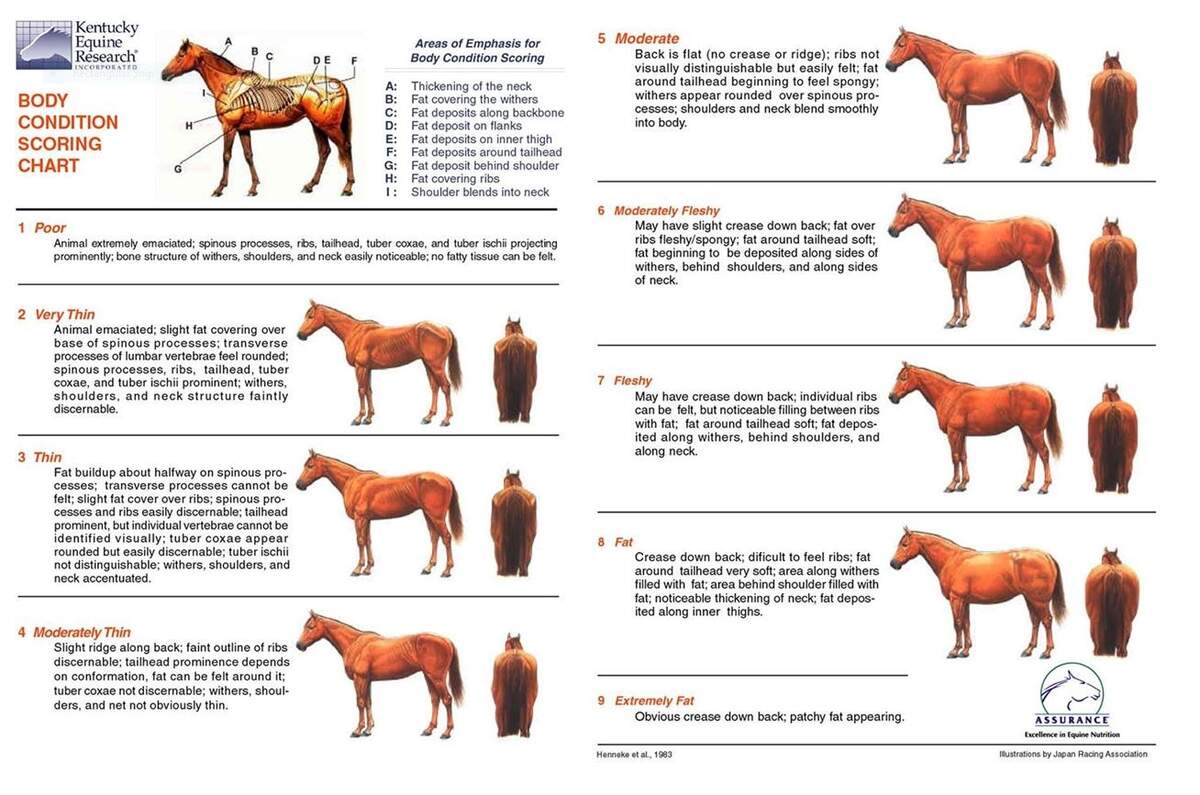
The Body Condition Score chart is a numerical system that ranges from 1 to 9, with 1 being extremely thin and 9 being extremely fat. The scores are based on the palpable fat cover over specific parts of the horse’s body, such as the ribs, withers, and loin. Horse owners and veterinarians use this chart to assign a score to the horse based on its body fat reserves. The BCS chart is a valuable tool for horse care, as it provides a standardized method for evaluating and communicating a horse’s body condition.
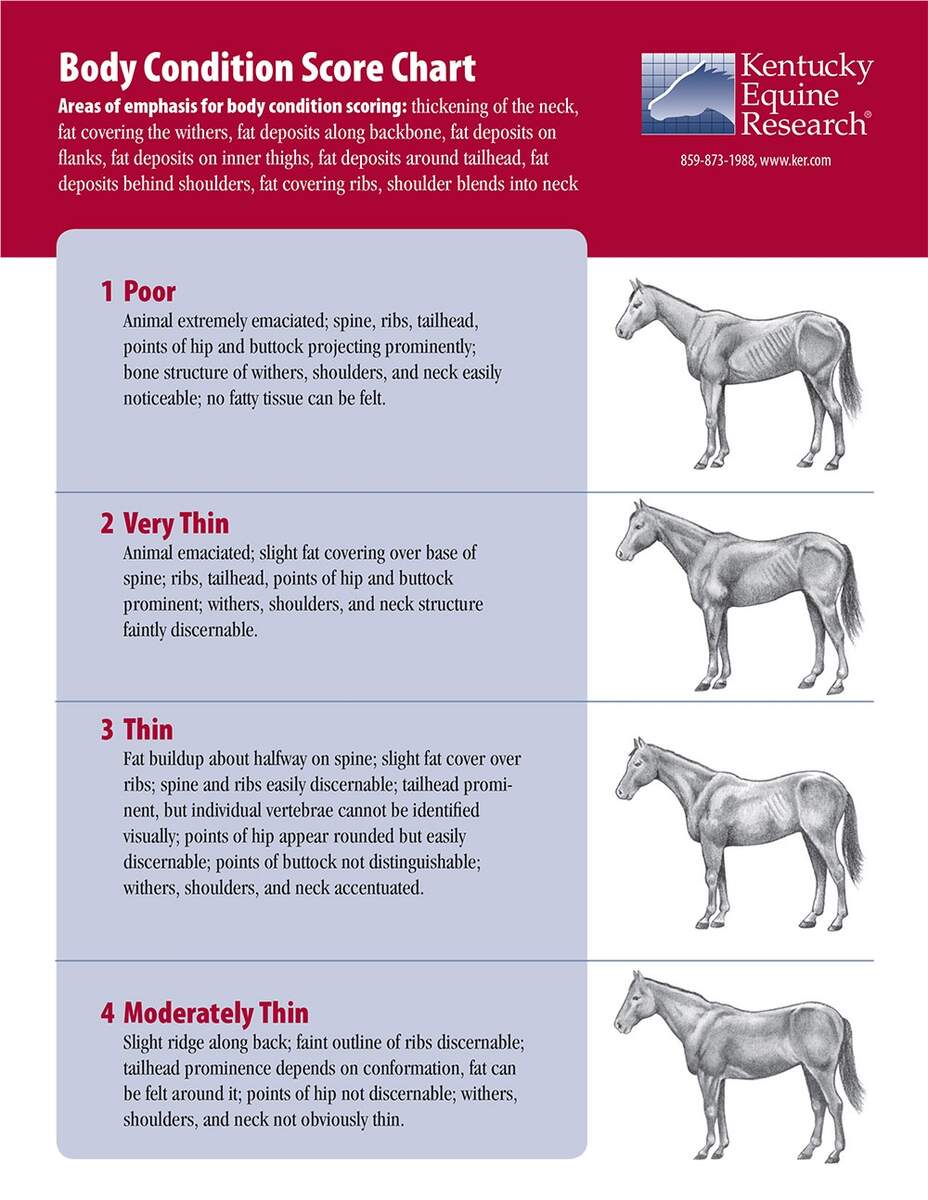
KER Body Condition Score Chart
How to Use the Body Condition Score Chart
Using the Body Condition Score chart is relatively straightforward. To assess a horse’s body condition, you need to feel the fat cover over the ribs, withers, and loin, and then assign a score based on the amount of fat you can feel. It’s essential to be gentle and systematic when palpating the horse to ensure accurate results. You can also use visual cues, such as the visibility of the ribs and the shape of the withers, to help determine the score. By regularly using the BCS chart, you can monitor changes in your horse’s body condition and make adjustments to its diet and exercise routine as needed.
Interpreting the Results
Interpreting the results of the Body Condition Score chart is crucial for making informed decisions about your horse’s care. A score of 4 or 5 is generally considered ideal, as it indicates that the horse has a moderate amount of fat cover. Scores below 4 may indicate that the horse is underweight, while scores above 5 may indicate that it is overweight. By understanding the results of the BCS chart, you can identify potential health risks and take steps to address them. For example, if your horse has a low BCS, you may need to increase its calorie intake or adjust its exercise routine to help it gain weight.
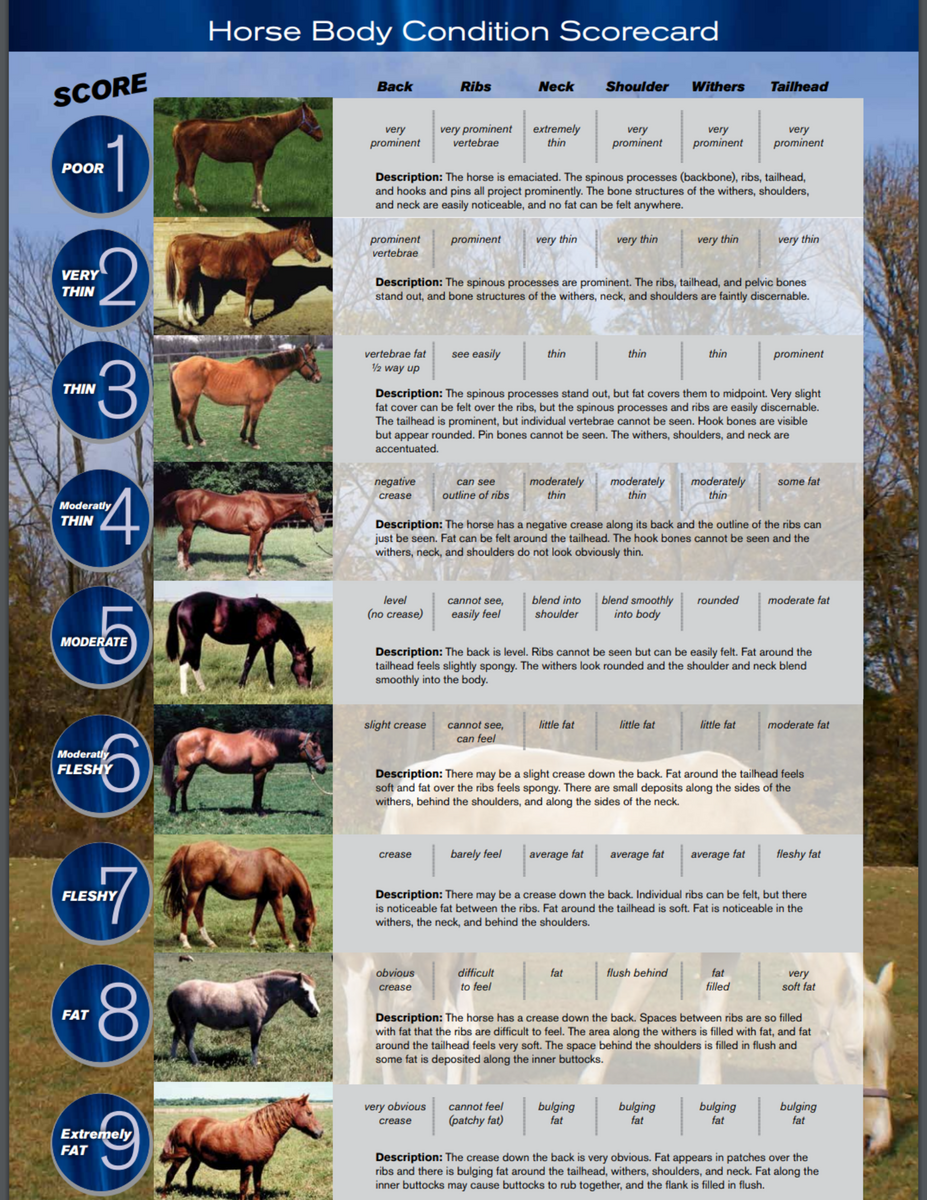
Equine Body Score Farmers Cooperative Association Inc Farmers Cooperative Association Inc
In conclusion, the Body Condition Score chart is a valuable tool for assessing and maintaining the optimal health of your horse. By regularly using the BCS chart and interpreting the results, you can ensure that your horse remains healthy, happy, and performant. Remember to always consult with a veterinarian if you have any concerns about your horse’s body condition or overall health. With the right knowledge and tools, you can provide the best possible care for your equine companion and enjoy a strong, healthy partnership.
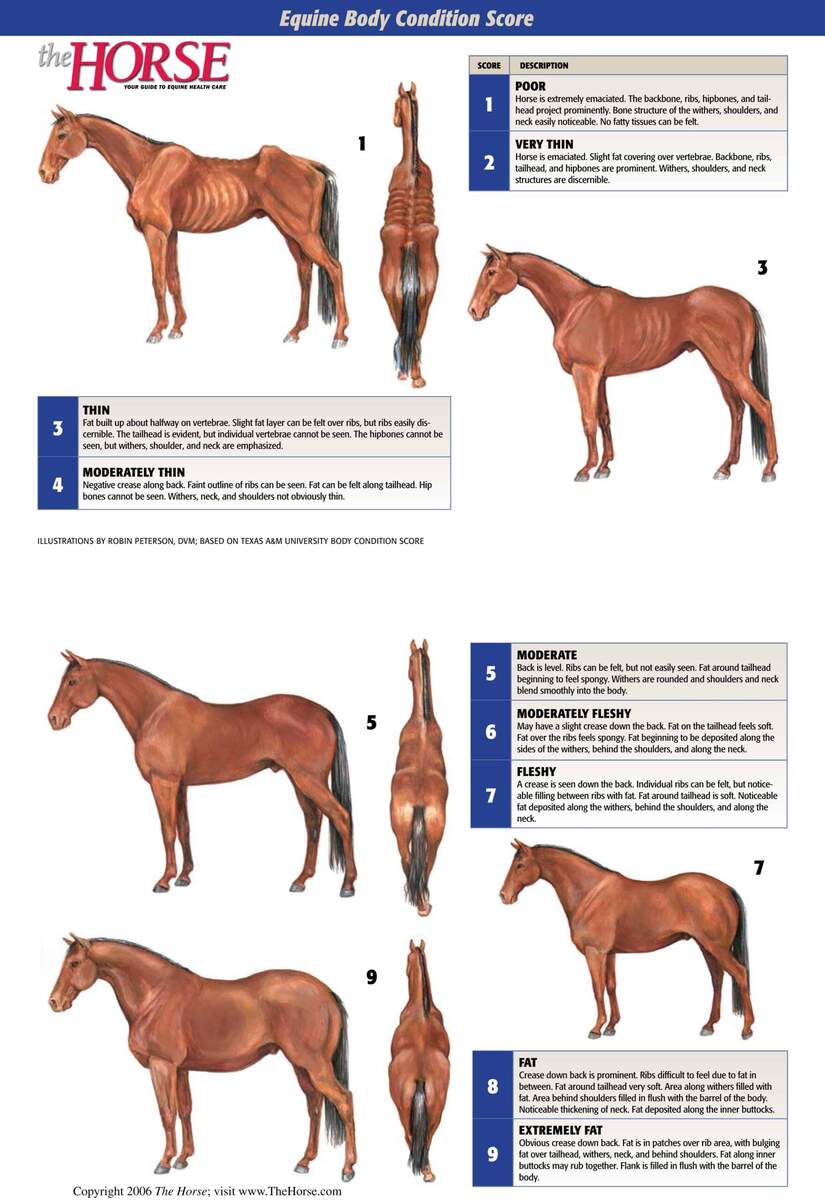
Equine Body Condition Score Poster The Horse
Body Condition Score Chart Fox Valley Equine