As a dog owner, it’s essential to monitor your pet’s health, and one crucial aspect is their body temperature. Dogs, like humans, have a normal body temperature range that can vary slightly depending on factors such as age, size, and breed. A dog’s normal body temperature typically ranges from 100 to 102.5 degrees Fahrenheit (37.8 to 39.2 degrees Celsius). However, it’s crucial to understand that this range can fluctuate, and any significant deviations may indicate an underlying health issue.
Recognizing abnormal body temperatures in dogs can be challenging, especially for new pet owners. That’s why having a dog body temperature chart can be incredibly helpful. This chart provides a reference point for what’s considered normal and what’s not, allowing you to take prompt action if you suspect your dog is unwell. Whether you’re a seasoned dog owner or a newcomer to the world of pet parenting, understanding dog body temperature is vital for providing the best possible care for your furry companion.

Dog Body Temperature Guide Normal Range Fever Signs
Understanding Normal Dog Body Temperature
Understanding normal dog body temperature is the first step in using a dog body temperature chart effectively. The chart typically outlines the average temperature range for dogs, which, as mentioned, is between 100 and 102.5 degrees Fahrenheit. It’s also important to note that factors such as exercise, environmental temperature, and the time of day can cause minor fluctuations in a dog’s body temperature. For instance, a dog’s temperature might be slightly higher after vigorous exercise or in hot weather.

Dog Body Temperature Guide Normal Range Fever Signs
How to Check a Dog’s Body Temperature
Checking a dog’s body temperature can be a bit more involved than it is for humans, as it usually requires a rectal thermometer. It’s crucial to use a thermometer specifically designed for dogs and to follow proper technique to ensure an accurate reading and to prevent discomfort or injury to the dog. It’s also a good idea to get your dog accustomed to the process from an early age to make it less stressful for both you and your pet. If you’re unsure about how to check your dog’s temperature or if you’re concerned about their health, it’s always best to consult with a veterinarian.
Interpreting the Dog Body Temperature Chart
Interpreting the dog body temperature chart involves understanding what the different temperature readings might indicate. For example, a temperature above 104 degrees Fahrenheit (40 degrees Celsius) can signify fever, which may be due to infection, while a temperature below 99 degrees Fahrenheit (37.2 degrees Celsius) could indicate hypothermia, especially in smaller breeds or puppies. It’s also important to consider other symptoms your dog might be exhibiting, such as lethargy, vomiting, or loss of appetite, as these can provide critical clues about their overall health.
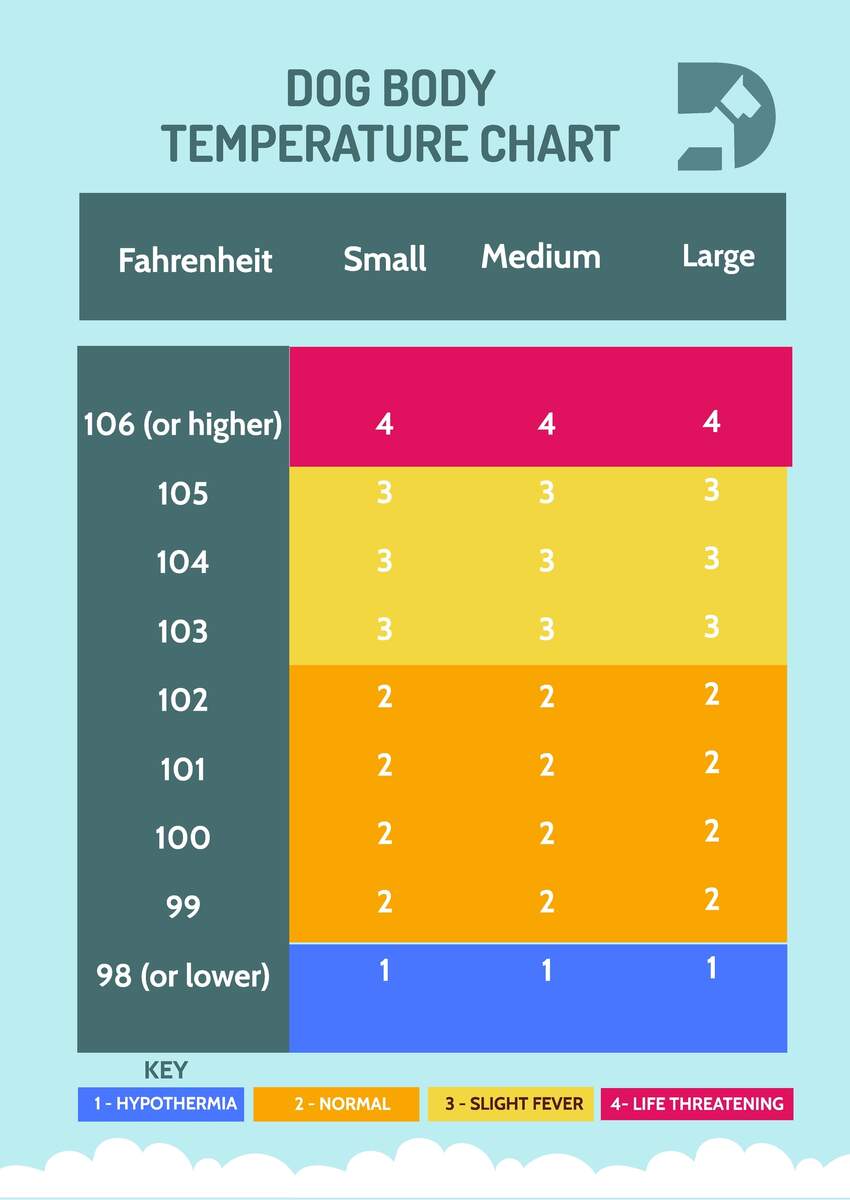
Dog Body Temperature Chart In Word PSD Illustrator PDF Download Template
In conclusion, a dog body temperature chart is a valuable tool for any dog owner. It helps in monitoring a dog’s health by providing a quick reference for what constitutes a normal body temperature. By understanding how to use this chart and how to check a dog’s temperature accurately, owners can respond quickly to potential health issues, ensuring their pets receive the care they need. Whether your dog is healthy and thriving or facing a health challenge, being informed about their body temperature can make all the difference in their comfort and well-being.
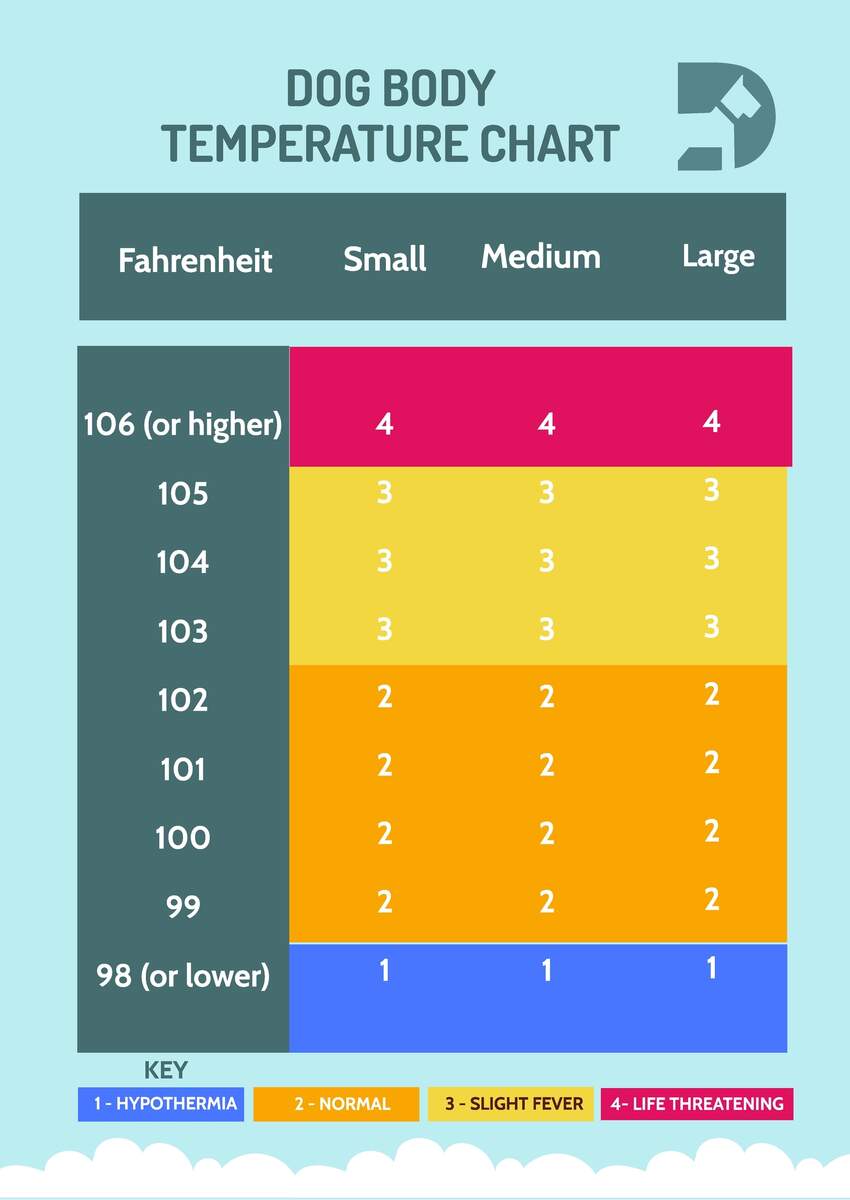
Dog Body Temperature Chart In Word PSD Illustrator PDF Download Template
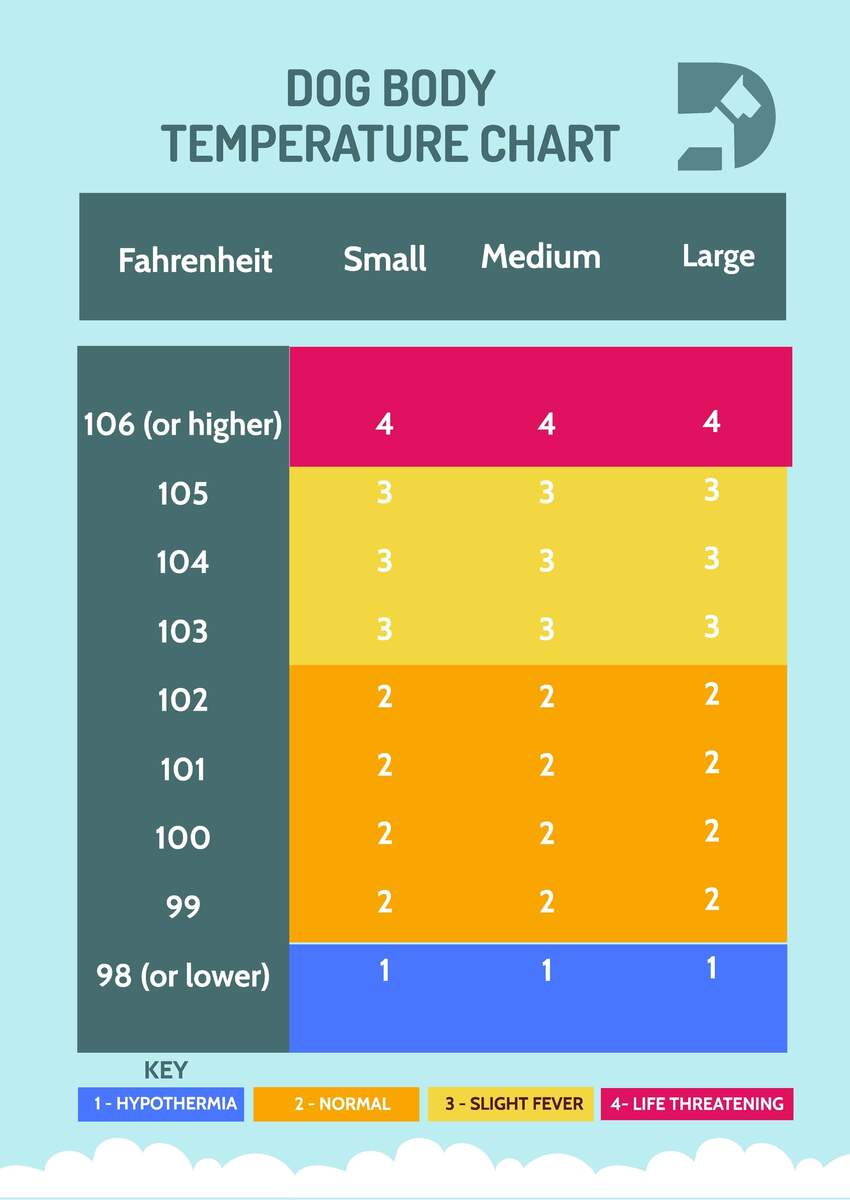
Dog Body Temperature Chart In Word PSD Illustrator PDF Download Template